Lemon Charm: A Practical Evaluation of This Playful Font Duo
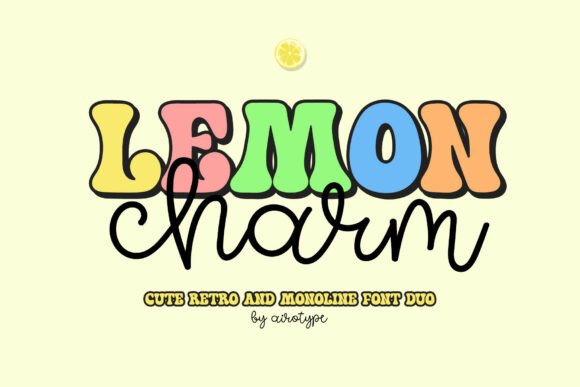
In the crowded landscape of digital typography, finding a font that balances personality with practicality can be a challenge. Lemon Charm presents itself as a solution for projects requiring a blend of whimsy and modern appeal. It is not a single typeface but a curated duo, pairing a playful retro-inspired display font with a bouncy, expressive handwritten script. This combination is designed to offer designers and creators a ready-made typographic system for themes that are festive, fun, and contemporary. The question for professionals is whether it delivers on that promise with the quality and flexibility needed for real-world applications.
Core Characteristics and Design Intent
At its foundation, Lemon Charm is built around two complementary styles. The primary component is a retro display font, characterized by soft, rounded letterforms and a nod to mid-century aesthetics. This style provides a sturdy, readable base for headlines and primary text. Its companion is a handwritten script font that introduces movement and a personal touch. The script is intentionally "bouncy," with varying baseline and x-height to mimic natural handwriting, avoiding the static, overly uniform look that can make script fonts feel artificial.
The stated purpose of this duo is to serve designs with a "cute and lovely" theme. This positions Lemon Charm squarely in the realm of casual, celebratory, and personal projects. It is not engineered for corporate reports or minimalist branding, but rather for contexts where warmth, approachability, and a touch of nostalgia are assets. The font files typically include essential glyphs, basic punctuation, and often support for multiple languages, though verifying specific language support for your project is always recommended.
Strengths in Practical Application
The primary strength of Lemon Charm lies in its usability for themed projects. By providing two fonts that are pre-selected to work together, it eliminates the guesswork and potential mismatch that can occur when designers pair typefaces from different families. This is a significant time-saver, particularly for those working under tight deadlines or without extensive typographic training.
Its flexibility across product types is another notable advantage. The font duo is well-suited for a range of physical and digital products. For instance:
- Apparel and Merchandise: The retro font works well for bold statements on t-shirts, while the script adds a personalized flair to items like keychains or tumbler wraps.
- Digital Assets: It can enhance the visual appeal of social media graphics, blog headers, and digital invitations, injecting personality without sacrificing readability at smaller sizes.
- Crafting and Sublimation: The style is inherently compatible with DIY crafts, stickers, and sublimation printing, where a handmade, festive feel is often the goal.
The consistency of theme is crucial. When a project demands a cohesive "cute and modern" aesthetic, Lemon Charm provides a unified starting point. This consistency extends to its presentation in mockups and previews, which often showcase the fonts in use on popular products, giving buyers a realistic sense of the final output.
Real-World Performance and Usability
In practical use, the performance of Lemon Charm hinges on the intended medium. For display and large-scale applications—such as event banners, poster headlines, or logo wordmarks—the retro font shines. Its rounded edges and clear shapes maintain legibility even when scaled up, and its vintage charm can make a strong visual impact.
The handwritten script, however, requires more careful consideration. While it excels at adding a human element, its bouncy nature can present legibility challenges at smaller sizes or in dense blocks of text. It is best used for short phrases, accents, or secondary information where its expressive quality can be appreciated without hindering comprehension. Testing the script at the actual size of your final output is an essential step in the design process.
From a workflow perspective, integrating Lemon Charm is straightforward. Once installed, the fonts appear in standard design software like Adobe Illustrator, Photoshop, Canva, or Procreate. Designers can quickly toggle between the two styles to find the right balance for their layout. The lack of extensive OpenType features (like stylistic alternates or ligatures) in many font duos of this nature means customization is limited to manual kerning and tracking adjustments, which may suffice for its intended use cases.
Ideal Users and Project Scenarios
Lemon Charm is most beneficial for a specific set of users and projects. Small business owners creating branded merchandise, party planners designing invitations and decor, and crafters selling personalized items on platforms like Etsy will find it particularly useful. Its ready-made pairing aligns with the need for efficient, on-brand content creation.
Bloggers and social media managers targeting lifestyle, family, or celebratory niches can use it to maintain a consistent, friendly visual voice. Similarly, educators creating materials for younger audiences or for classroom decorations might appreciate its approachable style. It is less suited for projects requiring high formality, technical precision, or a stark, contemporary aesthetic.
Considerations and Potential Limitations
No typeface is without its constraints. A key consideration with Lemon Charm is its thematic specificity. Its strength in cute and festive designs is also its limitation; it may not adapt well to projects that evolve beyond that initial theme. Investing in a font duo with such a distinct personality requires confidence that the brand or project's direction is stable.
Another practical point is long-term value. While excellent for its niche, designers working across diverse client industries may find its use cases somewhat narrow. It functions best as a specialized tool in a broader typographic toolkit rather than a foundational workhorse. Furthermore, as with any trending style, its "modern" appeal is tied to current design trends. While retro influences have enduring appeal, the specific blend of "cute" and "bouncy" may feel dated to some audiences over time.
Finally, always verify the licensing terms. Most commercial font duos like Lemon Charm are sold with specific usage rights. Ensure the license covers your intended applications, whether for personal projects, commercial merchandise, or digital products for sale.
Conclusion: A Focused Tool for Specific Needs
Lemon Charm is a competent and thoughtfully designed font duo that fulfills its intended role well. It offers a practical solution for designers and creators who need to quickly produce materials with a consistent, playful, and modern-retro aesthetic. Its value is highest for projects where that specific theme is central to the communication goal, such as in party supplies, children's products, or casual branding.
For professionals evaluating it, the decision should be based on a clear understanding of your project's audience and tone. If your work frequently involves creating joyful, personal, and lighthearted content, Lemon Charm can be a valuable asset that streamlines your design process. If your needs are more varied or lean towards the formal, it may serve as an occasional accent rather than a primary choice. As with any creative resource, its effectiveness ultimately depends on the skill and judgment of the designer wielding it.