Unleashing Vibrant Creativity: A Deep Dive into Chromatix, the Color Font Revolution
Understanding the Evolution of Digital Typography
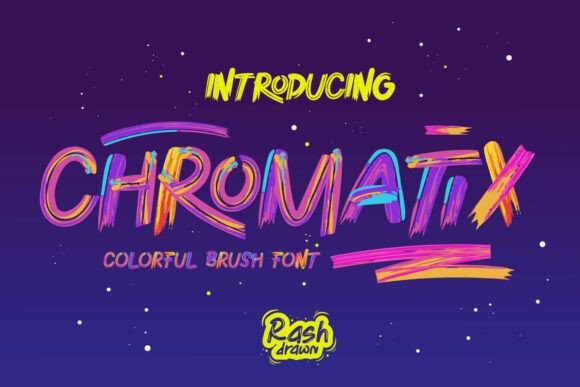
In the world of digital design, typography has always been the silent workhorse, conveying messages with clarity and personality. For decades, we have been limited to the traditional constraints of vector and bitmap fonts—essentially single-color glyphs that rely on external styling for visual flair. However, the digital landscape is constantly evolving, and a new era of typography has dawned: the age of color fonts. Among the pioneers of this vibrant movement is Chromatix, a high-energy, hand-drawn brush font that breaks the mold of conventional text design.
Chromatix is not merely a typeface; it is a statement. It represents a shift in how we approach lettering, moving away from static, monochrome characters to dynamic, multi-colored expressions. Designed to capture the raw, spontaneous spirit of street art and contemporary gallery pieces, this font brings an authentic, artistic flair directly to your keyboard. But what exactly is a color font, and why is Chromatix generating such excitement among creatives? To understand its significance, we must first explore the technology that powers it.
What Are OpenType-SVG Fonts?
At the heart of Chromatix lies the OpenType-SVG technology. In simple terms, SVG stands for Scalable Vector Graphics. Traditional fonts are essentially vector outlines filled with a single color chosen by the user. OpenType-SVG fonts, however, embed actual graphic data within the font file itself. This allows the font to contain multiple colors, transparency, and even textures within a single glyph.
Think of it this way: a traditional font is like a coloring book outline, waiting for you to fill it in. An OpenType-SVG font like Chromatix is a fully finished painting. When you type a letter, you are not just inserting a shape; you are placing a pre-designed, textured, and color-graded piece of art. This technology bridges the gap between typography and illustration, offering the convenience of text with the visual richness of a graphic.
The Unique Aesthetic of Chromatix
What sets Chromatix apart from other color fonts is its distinctive authentic brush stroke texture. Many digital fonts attempt to mimic handwriting or brushwork, but they often fall short, looking too perfect or sterile. Chromatix embraces imperfection. The edges are rough, the paint strokes are visible, and the texture mimics the look of ink on paper or acrylic on canvas.
Capturing the Spirit of Street Art
The design philosophy behind Chromatix is deeply rooted in urban art culture. It channels the energy of graffiti murals and the boldness of modern poster design. The color palette is vibrant and multi-hued, ensuring that every letter pops off the screen. Whether you are working on a project that requires a youthful, edgy vibe or a sophisticated, artistic touch, Chromatix provides the visual impact necessary to grab attention instantly.
For designers, this aesthetic solves a common problem: achieving that "hand-made" look without spending hours manually adding texture overlays and gradient maps in software like Photoshop or Illustrator. With Chromatix, the texture is built-in, ensuring consistency across every character while maintaining that organic, hand-drawn feel.
Practical Applications and Use Cases
The versatility of Chromatix makes it an invaluable tool in various creative fields. Because it is designed to "skip the tedious coloring process," it is particularly useful for projects that require rapid turnaround times without sacrificing quality.
Headlines That Demand Attention
As the description suggests, Chromatix is the ultimate tool for headlines that need to pop. In web design, advertising, and social media, the first few seconds of engagement are critical. A monochrome header can easily be overlooked, but a vibrant, textured header created with Chromatix immediately draws the eye. It is perfect for:
- Website Hero Sections: Create a stunning first impression with large, colorful typography that sets the tone for your brand.
- Poster Design: Whether for a music festival, a gallery opening, or a community event, the font provides an instant artistic vibe.
- Social Media Graphics: In a crowded feed, the multi-color palette of Chromatix helps your content stand out, increasing engagement and click-through rates.
Branding and Packaging
Modern branding is about personality. Brands targeting younger demographics or those wanting to appear innovative and creative can utilize Chromatix to infuse energy into their visual identity. Imagine a beverage label or a tech startup logo that features the raw, vibrant strokes of Chromatix. It communicates creativity, boldness, and authenticity without a single word of explanation.
The Technical Edge: Efficiency in Workflow
For professional designers and hobbyists alike, time is a precious resource. The traditional method of creating colorful typography involves:
- Typing out the text.
- Rasterizing or outlining the text.
- Applying gradients.
- Adding texture overlays.
- Masking and clipping layers.
This process can take minutes or even hours for complex layouts. Chromatix condenses this workflow into a single step: typing. Because the gradients and textures are embedded directly into the OpenType-SVG file, you simply select the font and type your message. The "professional-grade" look is achieved instantly.
Compatibility Considerations
It is important to note that because Chromatix uses advanced SVG technology, it is best supported by modern design software and operating systems. Applications like Adobe Photoshop, Illustrator, and many modern web browsers support OpenType-SVG natively. This ensures that the vibrant colors and textures render correctly, providing the intended visual experience.
Addressing Common Misconceptions
A common assumption regarding color fonts is that they are merely "dings" or pictograms—like emojis. While emojis are technically a form of color font, Chromatix demonstrates that this technology is fully capable of supporting standard alphanumeric characters with artistic complexity.
Another misconception is that color fonts are difficult to customize. While it is true that you cannot simply change the color of the entire glyph to "red" in the same way you would a standard font (since the glyph contains multiple colors), many modern design tools allow for some manipulation of the underlying layers if the font is constructed properly. However, the beauty of Chromatix lies in its curated palette—trusting the designer's eye to provide a ready-to-use masterpiece.
The Future of Typography
Chromatix represents a broader trend in digital design: the demand for hyper-realism and texture. As screens become higher resolution and design tools become more powerful, the flat, vector-only aesthetic is giving way to richer, more tactile visuals. We are seeing this in UI design with glassmorphism and neumorphism, and in typography with the rise of color fonts.
By adopting tools like Chromatix, designers are not just using a new font; they are participating in the evolution of visual communication. They are acknowledging that text is not just a vessel for words, but a visual element that carries weight, mood, and context.
Conclusion: Embracing the Bold
In a world saturated with content, standing out is no longer optional—it is essential. Chromatix offers a solution that is both practical and visually stunning. It empowers creators to bypass technical hurdles and focus on what matters most: the message and the impact.
Whether you are a graphic designer looking to streamline your workflow, a marketer aiming to create eye-catching campaigns, or an artist exploring new mediums, Chromatix provides a bridge to vibrant, expressive design. It captures the raw energy of the street and the polish of the gallery, all within a font file. By embracing this technology, you can ensure that your words are not just read, but felt.